


Warrants on Background Checks
🔷
Warrants on Background Checks 🔷
Active Warrants and Background Checks
If you’ve ever applied for a job, apartment for rent, home or auto loan, security clearance, or professional license, you already be aware that background checks can impact real life in a big way. One of the most stressful surprises that catches people off-guard is learning that there is active warrant is showing up on their background check, much of the time without them even realizing a warrant existed.
A warrant showing up unexpectedly can create some serious barriers, even though a warrant is merely an allegation of a crime or failed court order. Still, because warrants are connected to civil and criminal court systems and law enforcement databases, they can appear in ways that look like a criminal record to employers, landlords, and agencies. To employers, landlords, and agencies, this can raise red flags during the screening process and create perceived risk, often leading to a delayed decision or an outright denial of the application.
Below is a clear breakdown of how warrants show up, why they matter, and what you can do to handle them and remove them from your background check.

Do Warrants Show Up on Background Checks?
Yes, warrants will likely show up on background checks. However, basic background checks may only show criminal convictions, while a more detailed check may show open cases, pending charges, arrests, and warrants. Multiple factors can influence what appears on the final report, including:
The type of background check being run
Which databases the screening company searches
Whether the warrant has been entered into state or national systems
The state/county where the warrant was issued
Whether the record is sealed, restricted, recalled, or still active
Reasons Warrants Are Included on Background Checks
Warrants can be issued for a multitude of reasons. They are court orders, signed for a judge for either civil violations, or criminal allegations. It’s important to mention that not all warrants come from serious violent crimes. Many are tied to non-criminal administrative or various civil procedural issues, but they still carry real consequences and cannot be ignored. These are some of the most common warrants that populate on a personal background check.
Failure to appear (FTA) in court from a direct summons
Missing, or overdue payments for fines or court fees
Parole or probation violations which come with additional criminal charges
New criminal allegations, for existing criminal convictions or new charges
A judge signing a warrant after charges are filed
Contempt of court or ignored court orders
If a warrant is not listed when screening someone’s background, it’s likely because it’s not considered public record. This may be for various reasons including national security, certain low level civil violations, or any of the reasons listed above.
How to Effectively Remove a Warrant From a Background Check
There are a few ways to remove a warrant from a background check, the easiest way is by resolving the warrant at the source, via the court or issuing government agency. Then once the warrant is cleared, you can then take the necessary steps to clean up how it appears in screening reports. There are advocacy agencies and non-profit agencies that can help with cleaning up your record to remove barriers for employment and housing opportunities. Here is an outline of the process you’ll follow when removing warrants for your background report.
Step 1: Confirm the Warrant Details
You need to know:
Which specific county and court it was issued in
The respective court case number (if available)
Whether it’s active or already cleared
Whether it’s extraditable and enforceable outside the county or state
You can confirm warrants through:
The county clerk of court
The sheriff department warrant unit
An attorney to research of your behalf
Reputable background screening services
Vetted public record websites
Step 2: Contact an Attorney
If there’s any risk of being arrested, an attorney can assist. Some of the tasks they can take on to insulate you from immediate arrest, while you have a chance to handle the underlying criminal charges, they can perform the following:
Check the warrant without directly exposing you to law enforcement
Contact the courts on your behalf
Arrange a court date to discuss your allegations
Request a recall, or have a judge quash the warrant
Help negotiate bond conditions or release terms until your hearing
In some circumstances, you may be able to resolve a warrant without being physically arrested, depending on your alleged criminal charges. If that is not an option, an attorney can assist you with surrendering to the courts, which is looked as a sign of compliance and potentially lead to more favorable outcomes.
Will Pending Criminal Charges Show on a Background Check?
Pending criminal charges can show up on a background check, but it depends on the type of screening being used and how the background screening company gathers its data. Many standard background checks focus primarily on convictions, while more comprehensive searches include county court records, open cases, pending charges, and criminal warrants. If the screening service includes a search of county court databases, pending charges may appear because they are part of the public court record in most U.S. jurisdictions, especially if there is an active arrest warrant.
This can create a lot of confusion and lead to unforeseen consequences, even though pending charges are not the same as a conviction. They are still allegations, and the person is presumed innocent until proven guilty. However, employers, landlords, licensing agencies, and other stakeholders may treat pending charges as a risk factor during the screening process, especially for roles involving trust, safety, finances, or access to vulnerable data systems. If a pending charge is listed incorrectly or lacks specific context, it can sometimes be disputed, especially if the information is does not belong to the individual being screened.
What If the Warrant was Incorrectly Issued In Your Name
Mistaken identity and recording errors happen, and probably more than most people realize. This is especially true with common first and last names. It’s always important to verify the warrant with a date of birth, registered home address, and SSN when possible. Always verify the warrant information and listed criminal charges before responding or addressing it directly with the courts or law enforcement.
If a warrant shows up incorrectly in your name consider these options:
1). Contact the respective county court or agency and dispute it.
2). Gather identity documents (DOB, SSN verification, prior addresses)
3). Confirm and verify directly from the issuing county court
4). Consult with an attorney about correcting the record
5). File the necessary paperwork to have the incorrect record removed
6). Follow up and run another background report once the issue is resolved to verify the incorrect record is gone.
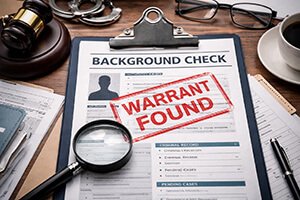
Are Warrants Criminal Records?
While an arrest warrant can eventually lead to a conviction, and a misdemeanor or felony criminal record, it’s important to understand that a warrant itself is not proof of guilt. It is still only an allegation that a crime occurred or that the courts believe that someone should be taken into custody by law enforcement.
This is one of the most confusing and frustrating parts for many people. A warrant is not the same as a criminal conviction, yet it often gets bucketed into a person’s “criminal history” when a criminal background check is run.
To an employer, landlord, or agency, a warrant may be viewed similarly to a criminal record simply because it is tied to the criminal court system. It can also be seen as a major risk factor, especially if it suggests an unresolved legal matter or pending case that may lead decision-makers to deny or move on from an application.
The main takeaway is that these records do show up on most background record checks. So, it’s considered a best-practice to run your own check to verify the information that others will see in your permanent record. This way, you can address and correct any issues with the information listed under your name. If you find there is an error with your record, it’s important to contact the issuing government agency and petition to have it removed.

FAQs About Warrants on Background Checks
Does a bench warrant show up on a background check?
Yes. Bench warrants commonly appear in civil court records, because they are issued by a judge when someone fails to appear or follow a court order. However, they are not considered criminal allegations or a criminal record.
How long do warrants stay on a background record?
In the majority of warrants remain active until they are resolved. They do not simply disappear or go away on their own. There is not a statute of limitations on these court orders, and will often accrue additional fines and charges if not dealt with.
Can a warrant affect me renting an apartment?
Absolutely, especially arrest warrants, since they often signal you’re involved in a criminal matter. Many landlords run criminal background checks during the tenant screening process, and this can raise major concerns. In some cases, it may lead to an automatic rejection based on property screening policies.
Why do warrants show up as part of a criminal record?
This is because the alleged crime listed on the warrant is tied to the criminal justice system an the courts have established probable cause and formally charged the person of interest with a crime. While they are allegations, they often result in a criminal conviction. However, it’s important to mention that not all warrants show up as a criminal record, just arrest warrants.
Do all background checks include warrant information?
No, not all background screening services show active warrants. Some will only show criminal convictions, where others may show active warrants, which are allegations of a crime.