

Check For Misdemeanor Warrants
🔷
Check For Misdemeanor Warrants 🔷
Misdemeanor Warrant Check
A misdemeanor warrant is a type of arrest warrant for an allegation of a misdemeanor crime. While less serious than a felony warrant, many people underestimate misdemeanors, assuming they are “minor crimes” or do not need to be dealt with immediately. In reality, an active misdemeanor warrant can lead to a person’s immediate arrest, restrictions on traveling, additional penalties, and long-term legal consequences if not handled promptly.
In the following sections we will cover what a misdemeanor warrant is, the specific risks with having one, and the best steps to take if one has been issued in your name. Take time to review the importance of what these implications are, as they will show up on a background check, and can plague your good name for many years.

What Is a Misdemeanor Warrant?
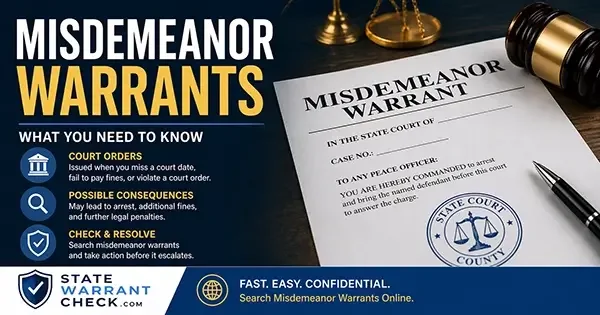
A misdemeanor warrant is defined as a court order directing law enforcement to arrest a person suspected of an alleged misdemeanor offense, or that person’s failure to comply with a specific court requirement like failing to appear at their arraignment or criminal court case. Once a warrant is issued, it will remain active until it that person is arrested, the judge quashes it, or the underlying criminal allegation is dropped. These do not go away on their own and there is no statute of limitations on the majority of misdemeanor charges.
The most common reasons a misdemeanor warrant is issued for someone’s arrest are:
Failing to appear in court for a misdemeanor criminal charge.
Unpaid or long overdue court fines or fees.
A violation of their probation terms for a prior conviction.
Ignoring a direct court summons or court order.
New, or additional misdemeanor charges supported by evidence.
Implications of Having a Misdemeanor Warrant
While a misdemeanor criminal offense is less serious than a felony, the consequences of having one issued in your name can be quite significant. And, Ignoring a misdemeanor warrant most certainly make your situation worse. Here are some of the things to look out for if a misdemeanor warrant has your name on it:
Be arrest at any time: Law enforcement can and will arrest you during a traffic stop, ID check, or during TSA checks.
Expect jail time: Most misdemeanor warrants will carry a strong possibility of short-term incarceration.
Added fines and fees: Late penalties, warrant fees, and bond costs can accumulate.
Additional Probation: If you are already on probation, a warrant can trigger violations and harsher penalties.
Shows up on Background Checks: These will appear in any background check, potentially affecting employment or housing.
The most important thing to take away from this is the need to address the underlying issue without delay. Ignoring or postponing any type of misdemeanor court order will only cause the situation to progressively worsen over time. While dealing with the matter may feel uncomfortable in the short term, it will almost certainly become far more complicated and difficult if you continue to delay taking action.
How to Handle a Misdemeanor Warrant
Taking these proactive steps can greatly benefit you and potentially reduce the legal consequences you might face. It’s also important to not delay when addressing these as you may be arrested at an inconvenient time, at home, at work, or while driving.
1. First Confirm the Warrant’s Validity
A couple of the most concrete ways to verify the warrant is through the court clerk, or a reputable public records search. Make sure you know:
a)., The state and respective county court that issued it
b). What the underlying criminal charges are
c). If you can bond out of jail once you surrender
2. Contact a Defense Attorney
Once you’ve confirmed the details of the warrant and it’s validity, contacting a seasoned criminal defense attorney can often help:
a). By arranging a voluntary surrender or court appearance
b). Filing a request that the warrant be recalled or quashed
c). Negotiate on your behalf for a bond or release conditions
d). Prevent any unnecessary arrest or jail time before your hearing
3. Avoid Law Enforcement Encounters
Until your warrant is formally addressed, try to avoid any type of situation where ID checks are likely, such as traffic stops, courthouse visits, or TSA checks if possible. This will hopefully keep you out of jail until you can petition your case in court.
4. Make Your Appearance in Court Voluntarily
Voluntary compliance of your own volition will reflect positively on you and the judge may grant you some liberty that can potentially lead to:
a). Reduced penalties, jail time, and probation
b). Lowering bond amounts to get out of jail before your trial.
c). Release you without custody in some cases, depending on the crime.
5. Resolve the Underlying Issue
This may involve paying fines, attending court, complying with probation terms, or addressing missed appearances. Once compliance is documented, the court can clear the warrant.
Do Misdemeanor Warrants Expire?
No. Misdemeanor warrants generally do not expire. They remain active until resolved by the court, regardless of how much time has passed.
Waiting rarely benefits anyone with an active warrant and often leads to harsher outcomes. It’s in a person’s best interest to swiftly deal with a warrant before it’s escalated and additional charges and fines are bolted on to the existing criminal allegations.
Flying With a Misdemeanor Warrant
It is possible in some circumstances to board an airplane and fly within the United States, however traveling to another country can be risky. If you are deemed to be at travel risk, you may be arrested at the airport no matter where your destination is. Here are the various risks with both domestic and international travel:
1). Domestic Travel Within the United States: You may be stopped at TSA and be apprehended and extradited if traveling to another state if the charges involve probation violations or serious misdemeanor crimes. If you are uncertain if you can travel with one, it’s best to consult with an attorney first.
2). International Travel Outside the United States: Outstanding warrants will prevent passport renewal and suspension. Many countries will refuse entry if a warrant comes up on background screening. Customs and Boarder Protection have the right to detain you at the airport when you’re going through security.

Misdemeanor Warrant - FAQs
How long do misdemeanor warrants last?
The do not expire or go away on their own. Misdemeanor warrants last indefinitely, or until the underlying issues are satisfied, the criminal charges are dropped, or the person listed on the warrant is arrested. The will usually get worse over time if ignored, meaning additional fines and penalties may be added to the existing criminal charges if not dealt with in a timely fashion.
Can you be arrested for a misdemeanor warrant?
Yes, the majority of these types of warrants will result in a person’s immediate arrest. Law enforcement will be authorized to arrest the person of interest at any time including at home, work, or during a routine traffic stop.
Are misdemeanor warrants considered public record?
Yes, in every most state in the U.S., misdemeanor warrants are considered public records and can be accessed by anyone. They will be accessible via background check which can affect employment, rental opportunities, and academic pursuits.
Can I travel with a misdemeanor warrant?
While it is possible to travel with a warrant, it is risky and you may be arrested at a security checkpoint, by TSA or Customs. If you are traveling to another state in a vehicle, you can also be arrested during a traffic stop, detained, and potentially be extradited back to the state where it was issued.
Will I go to jail for a misdemeanor warrant?
For more serious misdemeanors yes, but if you voluntarily surrender yourself to the courts or law enforcement you can potentially bond out of jail. You can also secure the services of an attorney to help you deal with and petition to the courts to keep you out of jail until your court date.
Can I get a passport with a misdemeanor warrant?
No, you will be restricted with obtaining or renewing a passport with any criminal warrant, whether it’s a misdemeanor or felony. Once you’ve dealt with the warrant and it’s removed or quashed, you can then safely apply for a U.S. passport. Any pending criminal charges or allegations is a red-flag that will limit your travel opportunities.
Can a misdemeanor warrant affect my probation?
Yes, if you are currently on probation, a misdemeanor warrant may result in a probation violation and result in additional fines, penalties, or jail time.
Will misdemeanor warrants show up on a background check?
Yes, since they are considered public records, they will show up on any background check. This means that anyone can view and access this information online, including employers, landlords, friends and family. They will stay on your background check until the warrant is removed, quashed, or handled in court.
How do I know if I have a misdemeanor warrant?
You can find out by contacting your county courthouse clerk or local sheriff department. You can also search anonymously using a public records website or background check service. It’s important to note that if you contact law enforcement about this inquiry, you may be arrested on the spot and detained until your court appearance or bond out of jail.
Should I turn myself in for a misdemeanor warrant?
If you voluntarily surrender yourself to the courts or law enforcement it will benefit your case in court. You may want to consult with an attorney first to see if there are any better options, or to have them petition the warrant on your behalf. It can be quite beneficial to be in compliance with the warrant orders, as it can result in reduced fines, penalties and jail time.