

Check For Arrest Warrants By State
🔷
Check For Arrest Warrants By State 🔷
State Arrest Warrant Check
An arrest warrant in any state is a legally binding court-order is issued when someone at large is suspected of committing a crime where a court determines they need to be arrested, detained and arraigned. However, before a criminal warrant is issued, there needs to be strong evidence, also known as probable cause, that is presented to the courts before a judge signs this court order.
Whether you are checking your own status or searching for someone else, understanding how these work, how to look them up by state or county, and what steps to take if one has been issued is important information to have. We will cover how to run a state and county level warrant search, and what to do if you discover that one has been issued for your arrest. These do not expire, or go away, so it’s in everyone’s best interest that has one to act swiftly and fastidious so that additional charges and penalties are not tacked on.

How Are Arrest Warrants Issued?
While an arrest warrant is fairly intuitive to most people, the process may not be. These cannot just be issued for any suspicion, there needs to be objective evidence, or a sworn affidavit by law enforcement, for a judge to initiate one. The 4th amendment of the constitution protects every American’s civil rights from unlawful searches and seizures. This essentially means that it is unlawful for law enforcement to simply arrest someone on suspicion, that would be illegal. Here are the formal legal steps on how a court ordered warrant is issued in every state:
Evidence & Investigation: Either a prosecutor, law enforcement, or the courts gather evidence that supports that a crime has been committed. This can be in the form of physical evidence, video surveillance, eye-witness testimony, or a sworn affidavit.
Determining Probable Cause: The evidence that is collected must be substantiated by probable cause, which means it is more likely than not, that a crime has been committed by a specific individual. This is where the 4th amendment comes into play, where without probable cause, a warrant cannot be legally issued for someone’s arrest.
Submission to the Courts: The evidence documentation, or sworn testimony by a law enforcement agent, is presented to the courts where a judge or magistrate must decide if this is sufficient to issue an arrest order.
Issuance of an Criminal Court Order: Once the courts have determined there is sufficient evidence and probable cause, they will issue this arrest order which directs the law enforcement to apprehend and detain the suspect immediately. This can be at home, work, school, or during a routine traffic stop.
Once Arrested: After the person listed on the warrant has been arrested, they will be detained until they are arraigned in court, unless released on bail before then. Regardless, that person will need to appear in court to face their charges and defend themselves, unless they plead guilty or no-contest.
Guilty or Not-Guilty: If the suspect was found guilty of the alleged crime, they will first be convicted, then sentenced, and then the arrest order will expire since they are in custody. If they are found not guilty, they will be released and the arrest order will also expire in this circumstance.
How You Can Fight an Arrest Warrant
While you have the constitutional right to petition and fight any warrant issued in your name, there are some important factors to consider when doing so. It is always considered a good idea to consult with an attorney in these situations, as the legal complications and court procedures may not be familiar to most people.
File a Motion to Quash: This is a legal process that formally asks the issuing judge or magistrate to cancel or recall the warrant. There are circumstances that will be considered such as; if it was issued in error, the underlying criminal case was resolved, or you are terminally ill or have an extreme emergency with extenuating circumstances
Negotiations with Prosecution: Your attorney may be able to negotiate a deal or plea-bargain with the prosecutor to reduce the charges, have release conditions without arrest, or have some type of alternative sentencing.
Lack of Probable Cause: If you can prove that the issuance of an arrest order was without sufficient probable cause. This typically happens when a lawyer challenges the validity of the evidence provided for the judicial arrest order.
Resolve the Charges: In some circumstances, mitigating the underlying issues or correcting any errors in the evidence can lead to the charges being dropped. An example of this is someone that has their identity stolen and the perpetrator committed a crime in another person’s name. If you can prove the alleged crime was not committed by someone else, using your name, then a judge may quash the criminal charges against you.
How to Run an Arrest Warrant Check
Since each state, and respective county, manages it’s own legal system for public records, running a check may vary slightly. While most counties and cities in every state offers online access to these records, some require a contacting the respective sheriff office, or county courthouse directly. Here is a breakdown of the various ways to run this search by state and county. You’ll need to know the person of interest’s full name and age or date of birth to proceed.
Search County Court Websites: Since warrants are issued by the courts, if you know the county where it was issued, you can either search via the county courthouse website, or inquire directly with the clerk of the courts.
Check With County Sheriff Departments: The respective county sheriff department is typically tasked with court orders for someone’s arrest. This means they’ll likely have a publicly accessible database that you can search online. If they do not, then you can always inquire with them directly via phone or in person. The only caveat to this method is if you have a warrant issued in your name, you may be arrested on the spot.
Search Statewide Law Enforcement Databases: Many states have a statewide database that is publicly accessible for anyone to search for active warrants and criminal records. An example of this is the California Department of Justice. They offer access to a range of public criminal records, including active warrants. Many states offer similar services, which is helpful if you don’t know what county to search.
Third Party Background Check Services: Another option, which has gained in popularity, is to use a third party background check service. There are a multitude of these privately run website that aggregate a number of public records that are accessible often with just a first and last name. This is a very convenient way to check for warrants statewide, or even nationwide. However, these services do often charge a fee for this search.
Active Warrant Details
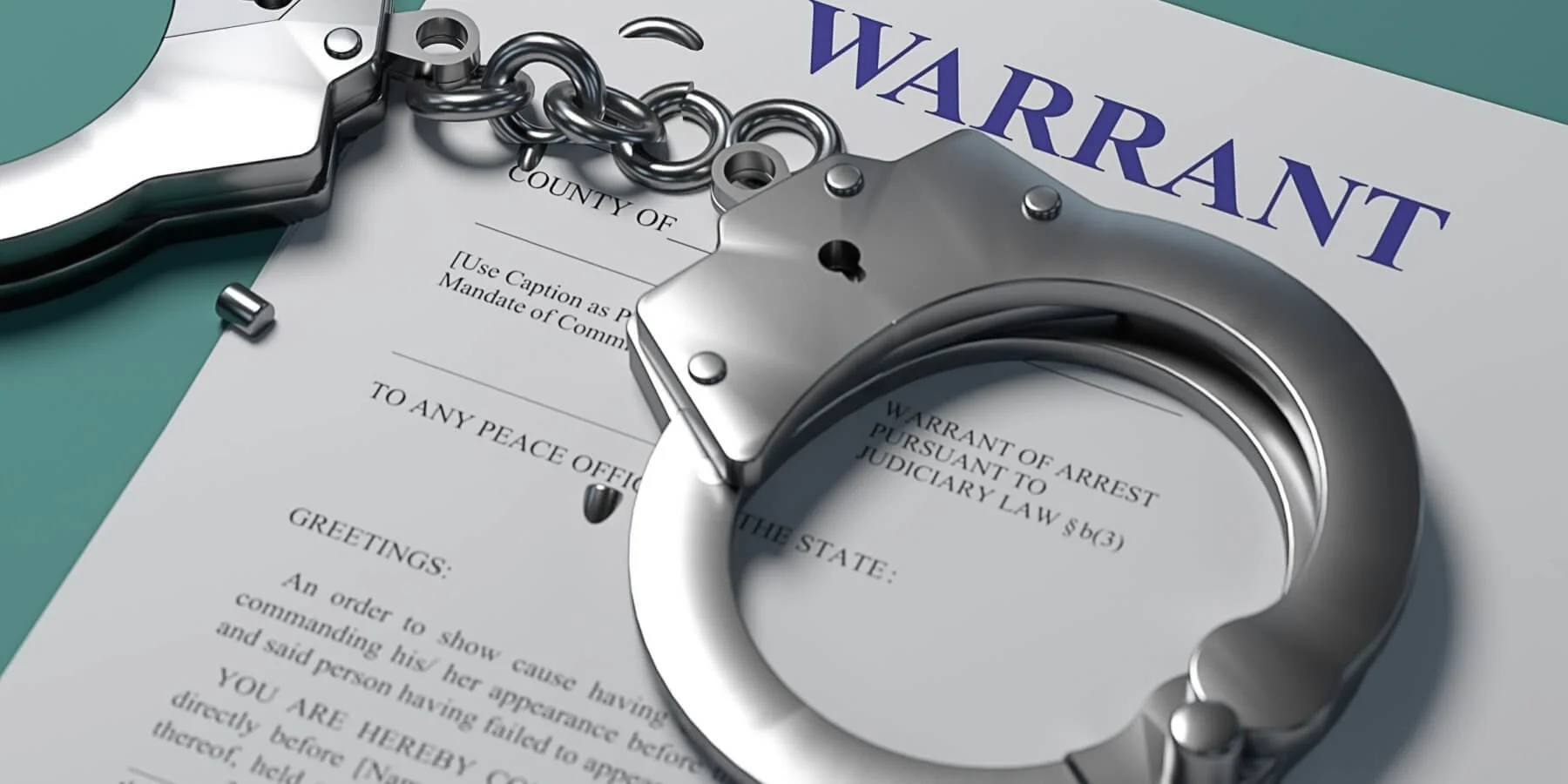
While there isn’t a standardized format for all active warrants, each state and county is required to show specific information that is shown to the suspect before taken into custody. Here are the primary details that are listed on these judicial arrest orders.
1. Identifying Information: The suspect’s full name, aliases, DOB, physical description & last known address.
2. Charges: The criminal allegations, whether it’s a felony or misdemeanor .
3. Probable Cause Statement: Evidence or sworn testimony supporting the arrest.
4. Signature & Date: The judge’s signature initiating the warrant and the date.
5. Assignment: Which law enforcement agency is assigned to arrest the suspect

Frequently Asked Questions About Arrest Warrants
Do arrest warrants ever expire?
No, they do not expire or have a statute of limitations. They will stay active until the suspect is arrested, the warrant is recalled or quashed, or the underlying criminal charges have been dropped.
How do I find out if I have an active warrant in my name?
You can check with your county courthouse clerk, the county sheriff department, reputable background check services, or your State Department of Justice. These are considered public records that anyone can access without needing to register or get special permission.
Are criminal court orders considered public records in every state?
Yes, the Freedom of Information Act makes these records public for everyone in every state. This means that you do not need to be law enforcement or an agent of the government to access this information. The fact that these are public records means that anyone can search for this information anonymously, and without having to make a formal legal inquiry.
How can I check for active warrants anonymously?
Many law enforcement website allow for public access to warrant information online without having to register. If you find this is not the case, you can use a third party public records or background check website to lookup this information anonymously.
How do felony warrants work?
Felony and misdemeanor warrants work the same, they both are judicial court orders for someone’s immediate arrest. However, a felony warrant is a much more serious allegation of a crime than a misdemeanor, and will often get priority for law enforcement to act on first.
Do all warrants show up on a background checks?
Yes, since they are public records and allegations of a crime, they will most certainly show up on any background check. The only way they will not show up on a background check is if they are recalled, quashed, or that person is arrested.
How do criminal court warrants work?
First, they are issued by a judge or magistrate for an allegation of a crime where there is strong evidence, or a sworn affidavit by law enforcement. Then once the judge signs the judicial arrest order, the respective law enforcement agency will be directed to find, apprehend, and detain that individual until they can be arraigned in court and face their criminal charges.
Do the police need a warrant to arrest me?
Not necessarily, if they witness a crime being committed or have probable cause that you’re involved in a criminal act, they have the right to arrest and detain you. They would need one if they went to your house without one, as this would violate your constitutional rights.
Can I remove an old warrant from my record?
Yes, if you have already been arrested and fulfilled the requirements of the courts, you can have it removed from your record. But, if it’s still active, then there is no way to legally remove it without a judge recalling it, or the criminal charges being dropped.
Is a criminal court order considered a criminal record?
Technically yes, but it is not considered a conviction until you have your day in court. Until you are proven guilty, it is merely an allegation of a crime, but not officially a criminal record. Unfortunately, it’s still recorded as such unless you can have it recalled by the courts, or the criminal charges against you are dropped.