


Harris County Warrants
🔷
Harris County Warrants 🔷
Harris County Warrant Search
If you believe there may be an active warrant in your name in Harris County, Texas, go with your gut and find out for sure. it’s important to address the matter quickly as they grow in complexity over time. Generally, these legal court orders do not disappear on their own, and left unresolved, they can lead to; arrests, additional criminal charges, suspended licenses, increased fines, or complications with employment and housing.
Harris County includes the city of Houston and is one of the busiest court systems in the state. Warrants can be issued for both serious criminal allegations and relatively minor civil violations such as unpaid traffic citations or missed court appearances. In this guide, we’ll explain how to confidentially search for these public records and help you to better understand the legal processes behind these judicial orders without alerting the person being searched.


How To Lookup Warrant Information in Harris County
While there are many ways to search for warrant information in Harris County, the best method often depends on the type of case you are dealing with. Different courts and agencies maintain separate databases for criminal matters, traffic violations, civil enforcement actions, and outstanding court orders. Some records may be available directly through the Harris County Sheriff’s Office, while others are managed through district courts, municipal courts, or justice of the peace courts. In many cases, individuals can perform online searches using a person’s name, case number, or date of birth, though certain records may require contacting the court directly for additional information. Understanding which agency oversees the specific matter can help make the search process faster and more accurate.
County’s Sheriff’s Department
The Harris County Sheriff’s Office maintains an online warrant search tool for active misdemeanor and felony warrants. This resource is publicly available and can be searched using a name, date of birth, or SPN number.
Common felony and misdemeanor warrants include:
Failure to appear in court
Unpaid traffic tickets
Probation violations
Assault misdemeanors
Theft misdemeanors
Driving without insurance
County District Clerk Records
Felony arrest orders, and more serious criminal matters, are also accessible through the District Clerk’s records portal. This is the most direct method of looking up active judicial orders and criminal court cases. You will need one of these search parameters to access records through this portal: complete name, case number, date of birth, attorney name. If you cannot find what you’re looking for on the portal, you can choose the “help desk” option or call the Clerk’s office directly @ (832) 927-5800.
These records may include the following:
Pending felony or misdemeanor charges
Bond forfeitures and judgments
Missed court appearances
Capias civil violation orders
Judicial criminal arrest orders
Municipal and Justice Courts
Other types of local and municipal warrants originate directly through the Houston Municipal Courts or Justice of the Peace courts. Traffic violations and Class C misdemeanors are frequently handled at this level. While these matters may initially seem minor, failing to address them can eventually lead to additional penalties, collections actions, license holds, or failure to comply with court requirements.
Many people are surprised to learn that unresolved traffic or municipal court issues can remain active for years if ignored. In many of these cases, people only discover these through driver’s license renewals, or background checks.
Common examples include:
Speeding tickets
Expired vehicle registration
Failure to maintain automobile insurance
Parking violations
Running red lights or traffic signal violations
Failure to appear in municipal court
Failure to pay court fines or fees
Minor ordinance violations
Although these offenses are generally less serious than felony or misdemeanor criminal charges, it is still important to resolve them promptly before they escalate into larger legal or financial problems.
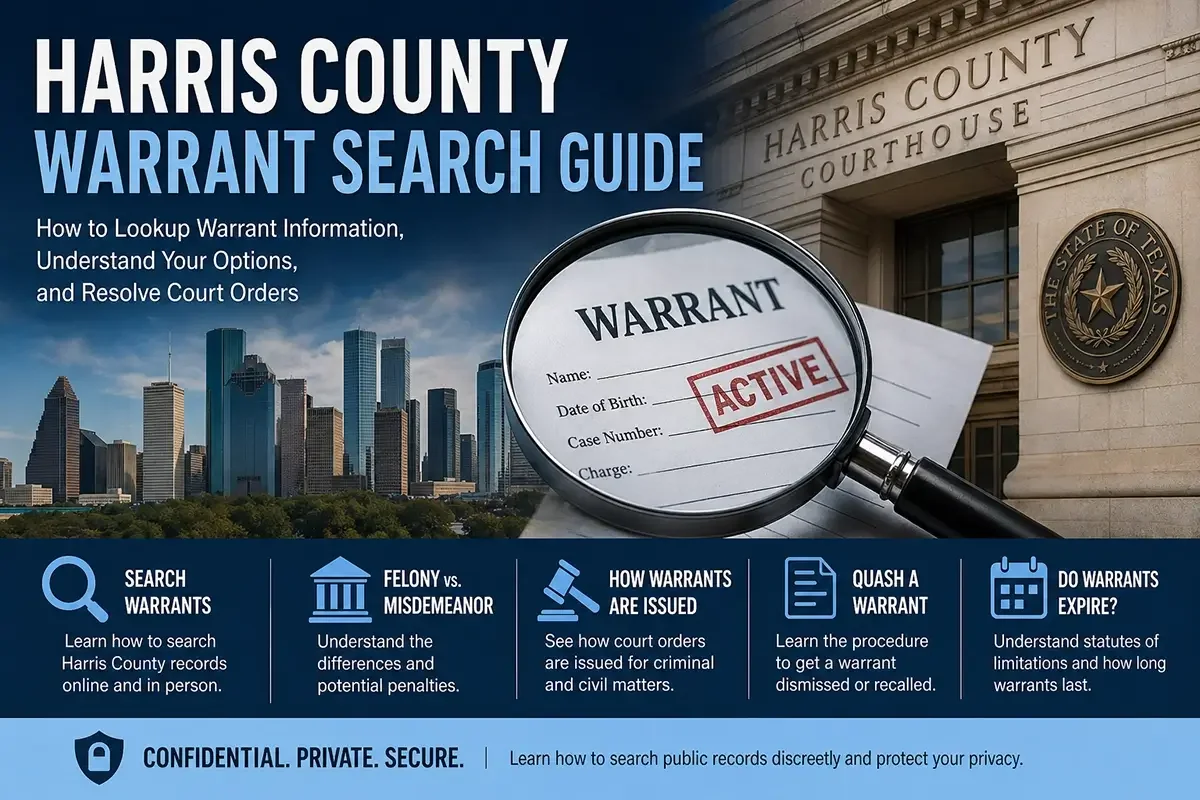
What Does It Mean To Quash a Warrant?
To “quash” a warrant means formally requesting that the court recall, cancel, or withdraw the judicial order. However, a judge will generally only consider granting the request if there is a legitimate legal basis for doing so, such as resolving the underlying issue, demonstrating an error, or showing that proper procedures were not followed.
This process will require filing a motion to recall with the court and appearing before a judge. Depending on the circumstances, a judge may agree to recall the warrant if the person of interest voluntarily appears and makes a good faith effort to resolve the case.
A motion to quash may be appropriate when:
The warrant was issued in error
The defendant never received notice
The underlying issue has already been resolved
The affidavit lacked probable cause
Constitutional violations occurred
In some situations, attorneys can make a court appearance and initiate a bond arrangement that allows a court order to be lifted without the individual being taken into custody.
State courts may also withdraw court-issued arrest orders after voluntary compliance. Under Texas Code of Criminal Procedure Article 45.014, which states that judges have the authority to cancel failure-to-appear court orders when a defendant voluntarily resolves the underlying matter before being taken into custody.
Do Warrants Expire?
The short answer is they do not expire. One of the most common misunderstandings is that warrants automatically expire over time.
In Texas, most arrest and bench court orders remain active indefinitely until:
The individual is arrested
The court recalls the warrant
The case is dismissed or resolved
There are no statute of limitations on these types of court orders. They do not go away on their own.

Misdemeanor vs. Felony Warrants
The main difference between felony and misdemeanor criminal charges comes down to the severity of the alleged criminal offense, and consequently, the type of court-ordered arrest authorization that may be issued. Felony allegations generally involve more serious crimes that can carry lengthy prison sentences, substantial fines, and long-term consequences such as the loss of certain civil rights.
Because of the seriousness of these criminal offenses, felony-related judicial orders are often pursued more aggressively by law enforcement and handled through higher-level district courts. Misdemeanor charges, while still criminal in nature, usually involve less severe offenses that may result in shorter jail sentences, probation, community service, or fines. Even so, misdemeanor court orders should never be ignored, as they can still lead to arrest, additional penalties, and a permanent criminal record if left unresolved.
Felony Criminal Charges
A felony arrest order is issued for the most serious criminal allegations, many of which carry prison sentences exceeding one year and substantial financial penalties if a conviction occurs. These types of criminal cases are typically handled through district courts and are often considered high priority matters by law enforcement agencies. In many situations, felony-related court orders authorize immediate apprehension and detention of an individual. They will often remain active indefinitely, or until the matter is resolved through the court system.
Common felony offenses include:
1). Aggravated assault
2). Drug trafficking
3). Robbery
4). Burglary
5). Sexual Assault
5). Homicide
Depending on the nature of the allegation, additional consequences may include probation restrictions, loss of firearm rights, difficulty obtaining employment or housing, and long-term damage to a person’s criminal record. Because felony allegations can carry life-changing consequences, those facing these types of court orders will need the help of a criminal defense attorney to get the best possible outcome.
Misdemeanor Criminal Charges
Misdemeanor arrest orders involve less severe criminal allegations than felonies, although they often result in an arrest, jail time, fines, probation, and a permanent criminal record if left unresolved. These cases are commonly handled through county courts, municipal courts, or justice of the peace courts depending on the nature of the offense. While misdemeanor offenses generally carry lighter penalties than felonies, Texas courts still take these matters seriously, especially when someone fails to appear in court or ignores court-ordered obligations.
Common misdemeanor offenses may include:
1). DUI/DWI first offenses
2). Petty theft or shoplifting
3). Disorderly conduct
4). Simple assault
5). Public intoxication
6). Traffic-related violations
7). Driving without insurance
8). Failure to appear in court
In many situations, misdemeanor-related court orders begin with relatively minor infractions that will escalate over time due to missed court appearances, unpaid fines, or probation violations. Even a low-level citation can eventually lead to an arrest authorization being issued by the court if the matter is ignored for long enough.
What Happens If You Ignore an Active Warrant?
An active Harris County warrant should never be ignored, even if the reason it was issued seems minor. The majority of judicial orders begin with simple missed court dates or unpaid citations but can quickly escalate into much larger legal problems.
If you believe there may be an active warrant in your name, it is usually wise to verify the information through official court or law enforcement resources and consider speaking with a defense attorney about your legal options for resolving the matter quickly and safely.
Ignoring a judicial order can lead to escalating consequences such as:
1). Arrest during a routine traffic stop
2). Being booked into county jail
3). Additional fines and penalties
4). Driver’s license renewal holds
5). Additional criminal charges
6). Increases in amount to bond out
7). Employment and housing complications
Texas courts make it clear that anyone with an active court-ordered arrest authorization remains subject to being apprehended and detained by law enforcement until the underlying legal matter is fully resolved through the judicial system. These judicial orders do not simply disappear with time. Persons of interest may be taken into custody during routine traffic stops, background checks, or other interactions with law enforcement. Any delay in addressing these legal court orders will likely lead to additional penalties, higher fines, suspension of driving privileges, or additional criminal charges. Addressing these legal matters proactively is regarded as the best way to minimize the long-term legal consequences.

Harris County Warrants - FAQs
How do I search for active warrants in Harris County?
You can search for active bench and arrest orders through official Harris County resources, including the Harris County Sheriff’s Office, District Clerk records, municipal courts, and Justice of the Peace courts. Searches are commonly performed using a name, case number, or date of birth. You can also use third party public record and background check websites to search for these records anonymously.
Are Harris County arrest records public information?
Yes, for the most part, unless those arrest records are sealed for privacy reasons or ongoing investigations. Most criminal court records and active judicial orders are considered public records throughout Texas, though some information may be restricted depending on the case type, age of the record, or court confidentiality rules.
Can I be arrested for missing a court appearance in Harris County, Texas?
In some situations, yes, particularly if the missed hearing is connected to a criminal matter where your appearance was mandated. When someone fails to appear in court, a judge may issue a bench order authorizing law enforcement to detain the individual until the matter is addressed. In other cases, the court may simply reschedule the hearing and tack-on additional fines and/or penalties. The outcome mostly depends on the nature of the case, the type of hearing missed, and whether there is a history of prior failures to appear.
Will a background check show arrest warrants?
Yes, it’s very likely as these are considered public records in Texas. Many background check services may display unresolved criminal matters, but they are not always fully accurate or updated in real time. Court records through official channels are generally more reliable and up-to-date.
Can unpaid court fines lead to jail time ?
Possibly in some situations. If the unpaid fines are repeatedly ignored, it can escalate into detention orders and possible incarceration. If you cannot pay your fines, the courts will usually setup a payment plan that will fit within your budget. It’s considered a best-practice to setup a payment schedule rather than ignore your overdue fines as this will only get worse over time.
Will an old unresolved criminal cases eventually disappear?
Not necessarily, unless there is a statute of limitation on the specific criminal charges. Many unresolved court matters remain active for years, or indefinitely, until they are formally resolved through the legal system.
How do I lookup Houston criminal court records?
Most municipal court records can be searched online through the City of Houston or Harris County court systems, depending on the specific case type. If you have difficulty finding the information you’re looking for, reach out to the Harris County Clerk for assistance.